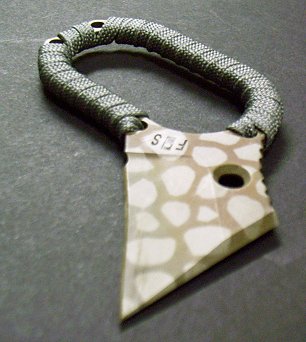
 She called herself “FrontSight,” and ten years ago, she was the elusive face of “HAK” — the Hideway Knife. The Martialist brought you a review of that knife all those years ago, highlighting its unique, secure design. Specifically, the HAK’s finger loop is sized to the user’s hand. Drawn from a low-profile Kydex sheath, and carrying a great deal of power in a very small package, the HideAway appeared to be the perfect low-profile self-defense blade when it debuted. It was a tiny claw you could carry with you always, one that would be very difficult to lose — even in the stress and physical trauma of a real-life confrontation.
At some point, the company appeared to change hands. Rumors of difficulty fulfilling orders followed. In the ensuing years, no single knife company has figured more prominently in queries to The Martialist. The questions were invariably the same: Who runs the company? What is its status? Are they still making knives? Should I place an order?
Recently, a proliferation of copies of the HAK, or knives that are at the very least inspired by the design, have renewed interest in the original HAK. In an effort to get, finally, the definitive word on this company, The Martialist tracked down and interviewed the man behind the business. He is William Ericson of Orlando, Florida.
As it turns out, William (whose Yahoo handle is “artemisweapons,” and who can be reached through that address) does return phone calls if those requests are made through his e-mail. As a one-man shop, he is exceptionally busy. When we prompted him, however, he had quite a bit to say about the past — and the future — of the Hideway Knife and Artemis Defense Systems.
The Origins of the HAK
As William tells the story, he incorporated Artemis Defense Systems, Inc. in 2003 as a Delaware corporation. He has always been its CEO and Chairman of the Board. A young lady using the Internet handle “FrontSight9mm” created the first wooden model of the HideAway Knife. From the first days of the company, she was in charge of all public communications, publicity, and e-mails for customer service. She was, in effect, the public face of the company. Behind the scenes, William did the knife design CAD, maintained databases and websites, and saw to shipping accessories as well as sheathing and knife production.
“Initially we water jetted blanks that went through a series of process steps,” William explains. “[This included] heat treat, double disk grinding, tumbling, chamfering of sheath retention holes… to arrive at blanks ready for final grind and sharpening by custom artists.”
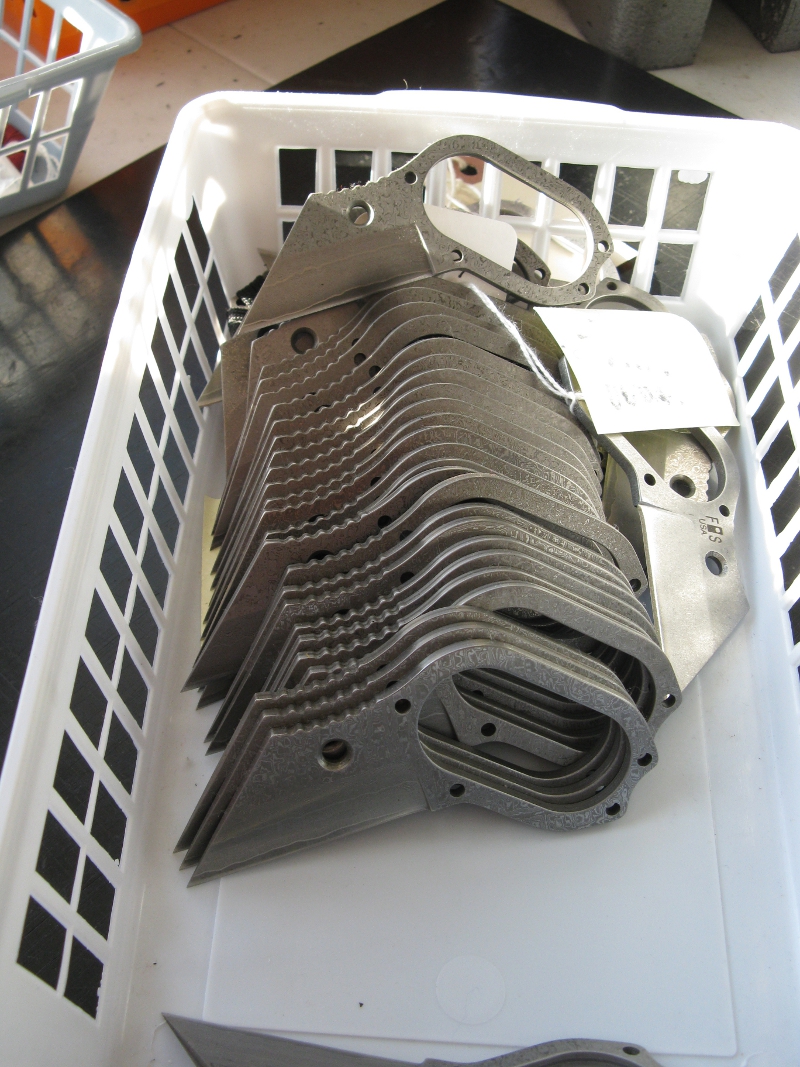
Those custom artists were a fairly impressive group. They included such notable knifemakers as Mick Strider, Ken Brock, Mickey Yurco, Rob Simonich, Jerry Hossum, Joe Brum, Peter Atwood, Matt Cucchiara, Charles Marlow, Justin Gingrich, Ken Onion, Tom Anderson, Bill Harsey, James Coogler, Tom Krien, Krien-Atwood, Kathleen Tomey and several others, some of whom declined to be named. “Knives were made to order based on reservations,” William says, “by sending prepared blanks to the specific requested artists. In 2004 Ken Brock was a very significant contributor with about 450 knives from his ballpark 800 HideAway total. Mick Strider was also a significant volume producer with about 800 total knives.”
Problems Arise
 Unfortunately for William and Artemis Defense Systems, it quickly became clear that demand for the HAK was going to outstrip the capacity of the company’s various contributor artists to finish and ship. Problems began to arise because website customers could not tell the difference between a knife that was paid for and awaiting completion, and a knife reservation representing someone who had been placed on a waiting list prior to payment. “People get very mad when they want to buy something and they cannot,” William points out.
To solve the problem, he sought to automate the process. Waterjets, double disk grinders, numerical control knife grinders, numerical control milling machines — William had the daunting task before him of figuring out how to use all of these. This introduced more controversy to the process: How collectible and rare will the knife be, versus how many people will be able to buy it, versus what will quality control look like? Automating the process threatened to change the product and therefore demand for it.
William’s background is in computer design, with companies such as Data General, Digital Equipment, and IBM. “I have always respected the artistry of machines and automation,” he told The Martialist. “There is a natural evolution in making anything where, as demand goes up — an artist might first do everything by hand, then create a jig to hold the knife to be able to grind it faster, and etc. — until the handheld artistry gets supplemented by more and more machine assistance. That evolution has never bothered me, because I see the difficulty of having $200,000 waterjets and $150,000 NC grinders. Lots of folks want the Picasso or the Renoir — some want to see the imperfections in a hand made item, but for the most part, everyone wants to be able to buy one and no one wants to get the really imperfect one that really could have used a bit of help from a well programmed machine.”
Automation with a Personal Touch
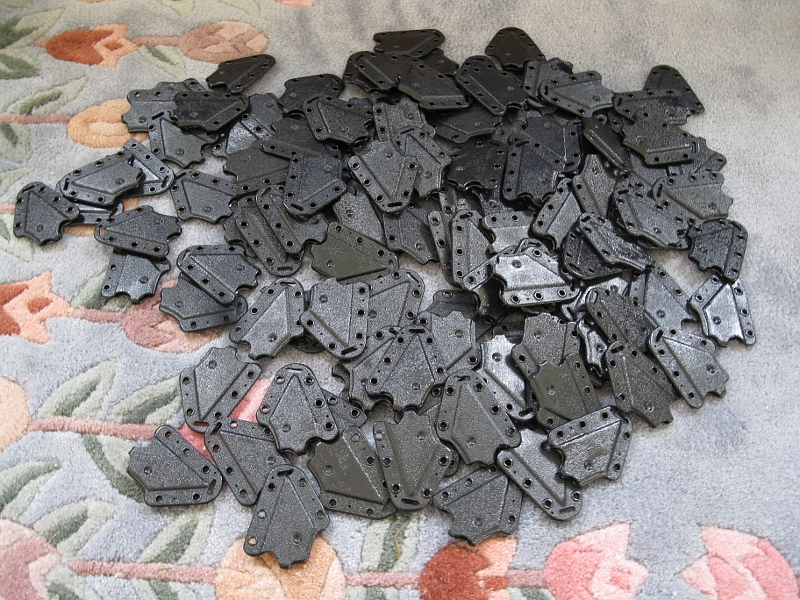
Even as William automates production of the HAK, there are still some personal touches. “I personally sheath every HideAway in a very labor intensive process,” he explains. “I heat kydex squares and step on two plates to form each sheath half — plates that were carefully created with a numerical controlled mill and CAD CAM software to achieve the perfect snap fit. The same plates that I step on to form a sheath half are used to drill the sheath rivet holes, and then the riveted sheath has its outline ground by a numerical controlled mill. The sheaths are hand flashed, drilled for sheath sticks, and blown out and oiled with baby oil. I still do this as a hold out to the personal touch even though an injection molding machine could do the process much more efficiently.”
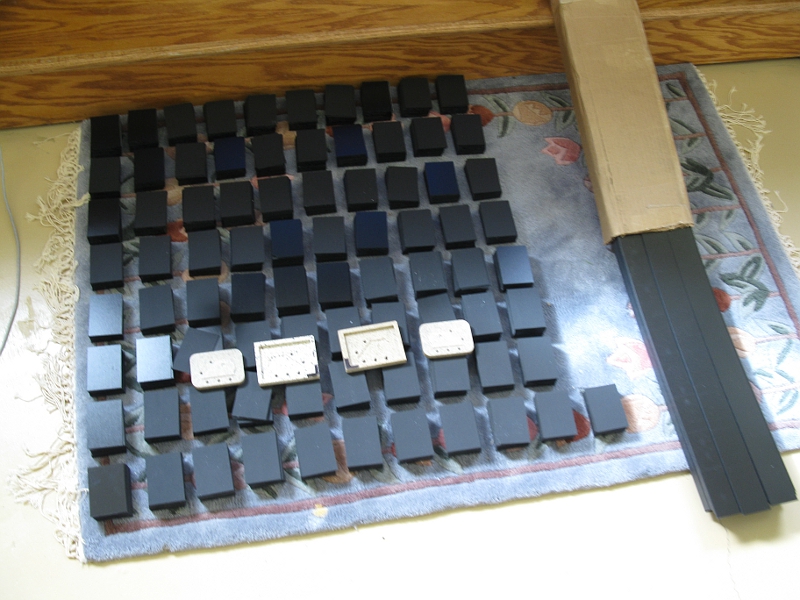
Insisting on doing the sheaths by hand limits William’s production to about 100 sheaths per day. These days, every single Hideway Knife is manufactured in Orlando by William Ericson. The company is, as they say, a “going concern.” But what of the problems with order fulfillment?
“In the 2004 and 2005 period,” William admits, “orders were so far beyond any artist’s capacity that people were getting mad at the delays for unpaid but reserved knives. Worse, FrontSight was confronting the demands placed on her by aging, dying parents, and we both had other full time jobs that were demanding — so her ability to type at beyond-human speeds diminished, but she kept her grip on being the exclusive face of HideAway. Orders for artists were not getting communicated and I did not know it.”
The reality of the problem came home to William when FrontSight, suffering from health issues and overwhelmed by the other demands on her time, turned over an amazing six thousand e-mail backlog, saying simply, “I cannot do this anymore.”
“All of a sudden,” says William, “HideAway was one person instead of two.”
More Troubles Arise
The problems didn’t stop there. FrontSight had created some pictures for a website by maker Ken Brock, a site for which William had created the code and database. When Ken needed support for the site, that need was not communicated through FS to William.
“I am sure that must have angered him,” says William. There was yet another issue, too, involving the woman who until then had been the public face of the company. To that point, FrontSight had guarded her identity very closely (so closely that to this day, very few people know here full name).William sees that mystery as yielding diminishing returns. “All of these artists wanted to meet the mysterious FS whose net presence was so commanding for a few years,” he explains. “A very beautiful woman, FS had undergone [some health issues that made her reluctant to go public].” The result was a public relations failure.
“Before long, the Mata Hari of the net was becoming more like the girl in the yellow polka dot bikini that was afraid to come out of the water,” says William. “These artists had no idea what she was going through. As the publicity of it taking too long to get a HideAway was growing before my volume production was kicked in, artists were fleeing in fear that bad publicity would rub off on them.”
Despite the difficulties he and his company faced, William is most understanding of the other individuals involved. “I am sure they had no idea how cruel they were being to a wonderful person whose intentions were always the best,” he concludes. “I have always adored the brightest strong willed women — but I have learned that everyone will find their limits. A business can grow fast enough to overwhelm anyone. Net gossip can behave like a nest of rats. Artists not understanding the unlimited demand, fearing being associated with publicity of slowness, fled — making my production more critical. FS had designed the Badlands forums and for some time we were getting promises that after turning it over, more artist production on backlog would happen. It did not.”
In order to repair these mistakes, William implemented a process wherein HideAway Knife process steps are done in batches at a variety of machine shops across the United States. William sees this as a marked improvement on his early methods.
“In the first two years of production, HideAway blanks were each tagged with a piece number and the website software updated the status of each knife in a batch based on the step the batch was at. There were real issues with this approach. You can imagine that 50 tags on a small batch of knives would not fare so well going through the fires of hell in a Paul Boss heat treat — and with so many discreet process steps, while each knife was targeted to a specific customer, tagging and re-tagging was prohibitive eventually.”
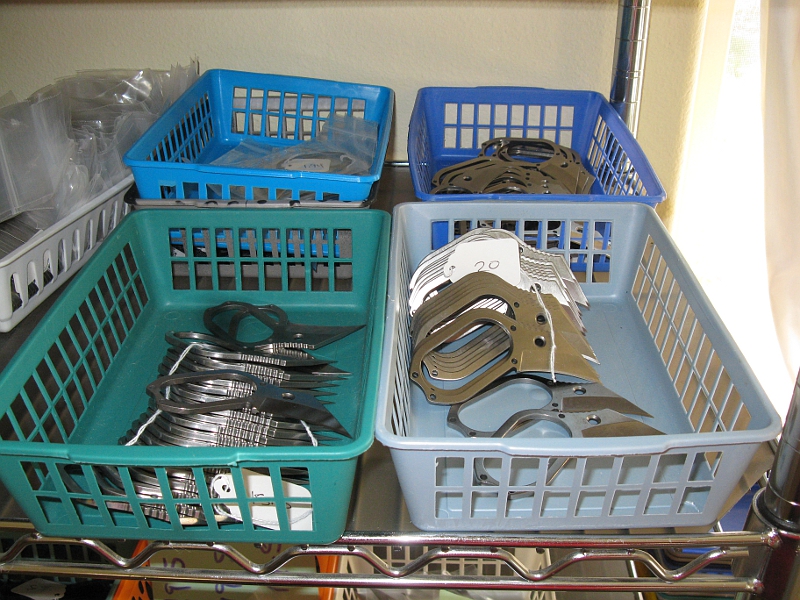
Hand grinding also proved unpredictable. “You could not predict which knife might meet a bad fate with a slip of the grinding hand, thus altering the schedule on a knife in an instant of mishap,” William explains. “You never knew what would survive in a batch until the artists returned what they were going to return.”
The result was that the status dots and tracking the knife’s progress on the HideAway Knives website quickly became obsolete. Batches became much bigger, sometimes 3000 knives at a time, with many batches in the works at any given time.
Meeting a Growing Demand
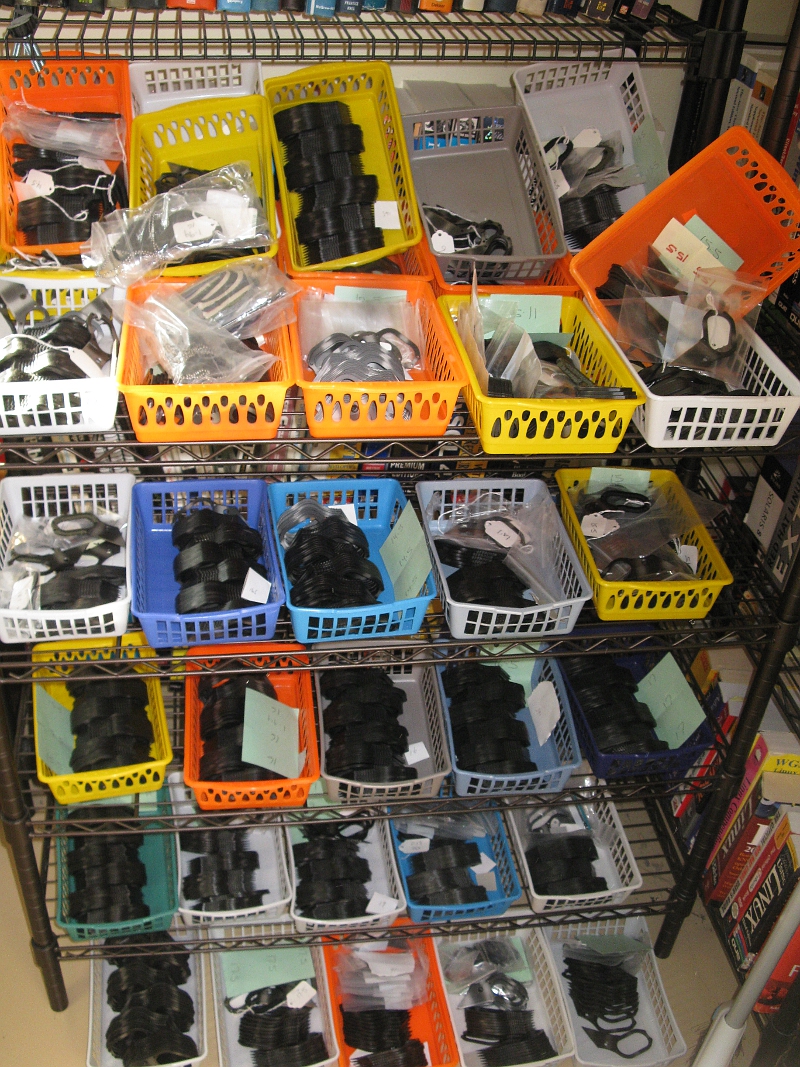
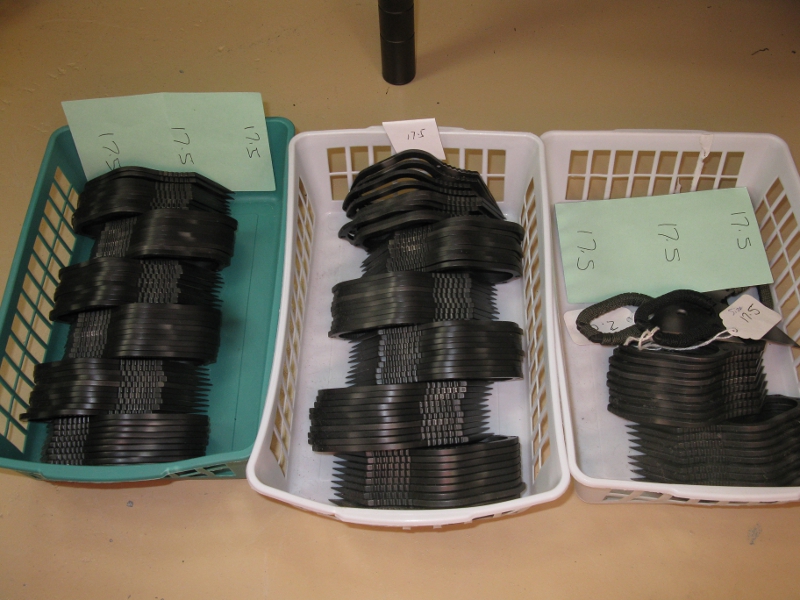
William pegs his production capacity at 100 knives per day, matching his sheath output. “It is very bad to be out of anything,” he warns, “because that will generate an e-mail asking when it will be ready. Emails are very expensive. At 3 minutes each, 100 extra emails would be 5 hours more work a day. So I am highly motivated to have everything a person might order on the shelf. I have 11 models in 4 metals and 32 sizes — and to span a 60 day production time, I could need 200 of each. That translates into 286,000 knives running 20 to 30 million bucks at retail.”
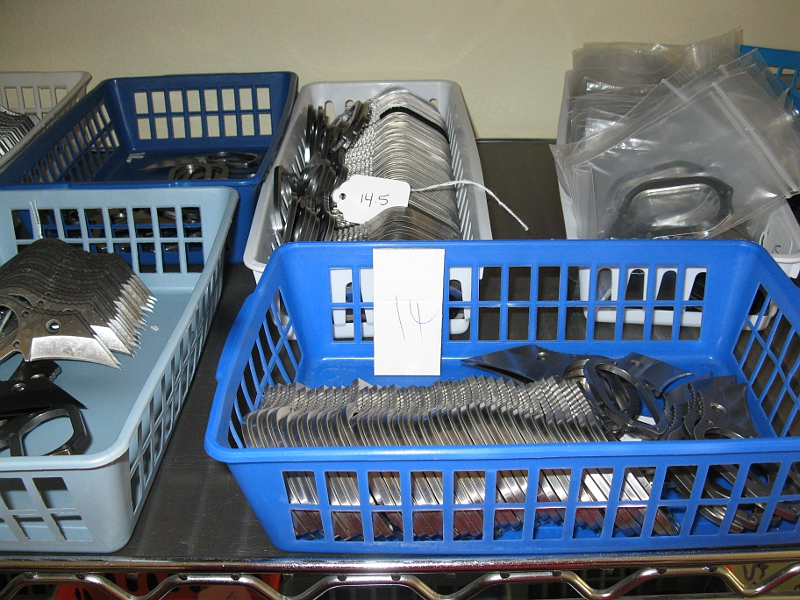
To the extent that William is able to keep enough of all 32 HAK sizes in stock, in models and metals, things go smoothly. He cites his tiger striped straight, tiger striped cat claw, utility, and tiger claw blades as being at that point. Metals that he does not have fully stocked at this time include titanium and Damascus.
Each stage of the company’s growth has presented different challenges, William explains. His website still allows reservations, for which customers pay nothing, but that makes his double shopping cart system complex and confusing to folks who aren’t used to asking for something to be made (then having the option to purchase it later when it is done and ready to ship).
Volumes are also much larger these days, but only a small percentage of reservations pay out when the knives are ready. That means that reservations are used as aggregate suggestions for what to make next as William fills out his inventory. One day, this procedure will eliminate reservations entirely.
Given that only three percent of people who reserve knives actually pay for them when they are completed, William would be quite reasonable to do away with the feature. He says, however, that an additional ten percent of reserved knives will be paid for over the course of a year.
“That means,” he explains, “that I leave many unpaid reservations set to “may pay.” The backlog of unpaid, ship-able knives can easily exceed 2 or 3 million bucks. If a lot of folks decide to pay all at once — for reservations that have been sitting unpaid for many months or years — I could come up short, depending how many of a metal/model/size are on the shelf. Most typically, if a knife is reserved and then paid when I email that it is ready, it should ship next day. If anything goes wrong, the net feedback can be fast and can impact schedule as much as anything.”
The impact of customer complaints is not minor. A single late knife, being complained about online, could prevent the sale of a thousand knives that are ready to ship. These are the very sales that would make the delay to finish the knife a matter of weeks. Schedule, for William, is about cash flow. He produces to his financial capacity on the theory that when he finally achieves complete inventory, all schedule problems vanish.
Small Business, Big Business
William has multiple investors as of 2013, all of whom have seen their investment grow. “The 2005 period of fleeing artists was one saga,” he says. “There was one other more recently of equal significance.” He goes on to relate how Bank of America first extended to him a line of credit, then summarily withdrew that line of credit in anticipation of the recession. “I was instantly going to be on the hook for 50K of production that was never going to hit my hands until I came up with the money,” he points out. “Worse, it would destroy my reputation with suppliers if something was done and I did not pay.”
Scrambling to make up the shortfall, William experienced further setbacks when multiple affiliate sellers took his merchandise but then absconded with the sales money. He is recovering from the economic blows dealt him, but the result has slowed production and also hindered him professionally.
“Some things in business can be quite beyond your control,” he says. “You need large cash reserves to buffer against things like this. Sadly, I mostly always put my last dime into production, because the growth ramp demands it. There have been times when folks have waited for a knife they should never have had to wait for. Everyone gets their knife. My inventory value exceeds my 3% late statistic by a factor of thousands to one. But sometimes to produce that one that is missing means spending for 2000 others just like it for economy of scale purposes. That can take time.”
The future holds many great things for HideAway, as William sees it. “Initially, FrontSight and I designed HideAway to be a corporation that would get bought out by a larger knife maker that wanted to sell my unique designs,” he says. “Currently I am planning on promoting and selling my designs for a couple more decades. People love the designs — these knives make people feel safe. When you sense danger you instantly become a human velociraptor. Then, like all good horcruxes, the knives sleep in your jewel box at night along with family heirlooms, favorite treasures, and your lucky rabbit’s foot.”
He will continue despite, he says, the incursions of copycat designs and outright counterfeit HideAways manufactured in China. His inventory will also continue to place a large demand on him because of its scope. This is part of the unique nature of the HideAway, and one of the things that make the design special.
“The sized nature of the HideAway dictates that inventory will demand more cash than most knives — 32 sizes is quite a burden — but less would not fit a person perfectly,” William explains. “So having complete inventory is quite a burden. Companies, in infancy, consume cash.”
HideAway, William told The Martialist, is a company still in its infancy, but one that has come a long way. “I am well established,” he says, “but the economy of scale required to hold price will take ever larger amounts of money. As I begin to use distributors to offload effort, there will be new issues,such as design ripoffs. There are problems for every stage of growth of a company.”
This article is a great insight into what is wrong with HAK. Clearly, William needs a great deal of help with business planning and strategy. I can’t imagine investing in a company with such a hapless executive at the helm.
Yup, I’m an unhappy customer. I ordered a knife in early January, paid for it 19 January, saw that it was in “QC” at the end of January and never got the knife. I wrote again to HAK, as instructed on their website, on 11 February asking for a status. I got a note back that they would ship a substitute knife and that my order would be ready “soon.” They shipped the substitute knife and the sheath. They’re OK, but the knife is not the one I paid $149 for. I sent another note on 15 March requesting a status; no reply. According to the site, the knife is still in QC. So, a couple of weeks to build the knife, and then 7 weeks in QC. I think they QC the space shuttle faster than that.
Today is 24 March 2013, and I still have heard nothing from the company. Their site says they won’t answer the phone, and that “Email works.” It doesn’t. The customer service part of being in business is clearly beyond their ability. I’d buy a knockoff just to avoid getting screwed by these guys.
Scott – lets review your note – it is significant because I have not sold another DLC coated S30V knife since you wrote your feedback. You paid on Jan 19 for a $159 knife that was to be sent out for DLC coating – a process that is batched and takes two ship transits. On Feb 11 you write and I ship you an identical knife in beautiful Damascus for free (list price $159) for the delay. It was not a substitute and you know that. But since your note shut down all sales – of DLC coated – you are left waiting for the knife that has to be coated in a batch. You think it is fair to wait about a month to virtually shut down my business because you wanted faster processing on your special coated knife – even though you got the identical shape in Damascus free.
My inventory demands that I stock 32 sizes in 4 metals at about 200 each in 11 different models. While I do not have all 286,000 knives (not even counting permutations like DLC coating) – I do have tens of thousands.
Normal sales without your feedback would have long since made it easy to pay for a coating batch – each knife is only $10 to coat. You might want me to be rich enough to do all this with just my money – but I actually rely on my sales for everything – including postage. It is very easy to write to artemisweapons@yahoo.com if you want a knife and say – send me a picture of it ready to ship. It does not take many people doing that to clear out all backlog of anything unshipped. I estimate that out of about 1.5 million knives shipped I have 200 problems at this instant.
I used to ship about 100 knives a day – about my limit.
What I have discovered is that a 3% late rate which is what I have – is sufficient to generate enough bad publicity to shut down sales that come from certain forums. It is very easy for me to tell anyone if the knife they want is one I have 100 of in their size – or if it is the last one. Drop the last one on its beak and you can be sure that it would take a long time to replace.
Batches are based on numbers – I typically cannot cut one knife alone economically. When you shut down all sales – batch times rely on me consulting and generating the money elsewhere.
I still get great feedback from those brave enough to buy after reading your feedback. But some folks on the net think the solution to theirs being the late exception is to assure I cannot sell another knife. That can slow me down a lot, but is great for Chinese copy cats.
You are not seeing a fair picture of the number of knives I ship next day, in the feedback here. I have doubled any order that went over 30 days for the last year – I have not seen any mention of that. Of those orders I doubled in the last 4 months – almost none exceeded 40 days.
There is only one email for resolving issues – it is artemisweapons@yahoo.com. It is best to refer to a reservation email when writing.
Generally any 440C knife should be on hand (tiger striped straights, tiger claws, tiger striped cat claws and utilities) , but some Damascus and S30V – may or may not be. S30V hybrids are on hand – but the hand sharpening can take sometimes take a few days. Two tiny hybrid are
waiting on new sheath plates.
Everyone gets their knife. My overhead is tiny. Virtually every dollar HideAway gets goes into inventory and shipping. If no-one ever bought another knife from me – that would definitely cause anyone needing a knife I do not have to wait a very long time.
This article makes for great reading and excuses. If you like horse-hockey. You say that HAK is still in business and going strong. That must be one line of BS. In 2010 I ordered AND PAID William for 2 knives, totaling $318, which I have never received. Chased him around for 2 years until he quit responding to all communications. Always promised to have the knives to me in a week to 10 days. Never showed up. I believe this man would lie to his mother! Don’t tell me about people reserving knives and never paying. Mine were paid for the minute they were ordered. He has my money and I have nothing. He should be able to make a pretty good income by taking payments and never delivering. Maybe you should write an article based on information gleaned from people who have been swindled by William. THEN YOU WOULD KNOW THE REAL TRUTH ABOUT HIDEAWAY AND ATREMIS DEFENSE.
STAY AWAY FROM THIS BUSINESS – CROOKED IS TOO KIND OF A WORD TO DESCRIBE HIS BUSINESS ETHICS!!!!!
16 of my customers registered their first name as Randy since 2003. Of those – none are missing knives and the average ship time was 7 days. The longest ship time was
27 days.
In your case – you would have to send artemisweapons@yahoo.com an email that includes Randy S.
and your reservation email for me to comment – since you might not really have listed Randy as your first name. My mail from 2003 does not find Randy S in a search.
But many use wives names etc.
You could reply here with your size and the models – then I could comment publicly if I have them and coul ship them if I were given your reservation email.
If you send me your reservation email – I can comment without mentioning it.
My Randy data below may not look useful if tabs do not work in this posting.
Randy statistics
378 reserved 2003-07-24 paid ? shipped 2004-02-07 Yurco custom specially made
1661 never paid
3302 reserved 2005-07-17 paid 2005-07-17 shipped 2005-07-29 time to ship: 12 days
3436 reserved 2005-08-07 paid 2005-08-08 shipped 2005-08-11 time to ship: 3 days
4600 reserved 2007-05-31 paid 2007-05-31 shipped 2007-06-27 time to ship: 27 days
never paid
never paid
never paid
never paid
never paid
4813 never paid
4950 never paid
5705 never paid
5804 never paid
6576 reserved 2005-08-07 paid 2005-08-27 shipped 2005-09-09 time to ship: 13 days
8022 reserved 2006-06-25 paid 2006-06-25 shipped 2006-06-26 time to ship: 1 days
8092 reserved 2009-10-21 paid 2009-10-22 shipped 2009-10-23 time to ship: 1 days
11216 reserved 2006-12-13 paid 2006-12-13 shipped 2006-12-23 time to ship: 10 days
12352 reserved 2006-10-10 paid 2006-10-10 shipped 2007-01-26 midnight brock custom specially made
13633 reserved 2006-12-28 paid 2006-12-28 shipped 2007-01-08 time to ship: 11 days
29225 reserved 2012-12-14 paid 2012-12-14 shipped 2012-12-19 time to ship: 5 days
reserved 2012-12-14 paid 2012-12-14 shipped 2012-12-19 time to ship: 5 days
reserved 2013-01-14 paid 2013-01-15 shipped 2013-01-15 time to ship: 1 days
reserved 2013-03-11 paid 2013-03-12 shipped 2013-03-14 time to ship: 2 days
For Randys: Average time to ship 7 days
I too have paid for a knife that was never shipped, his excuse in the beginning was the DLC coating batch was not back from whoever was doing the coating. That lasted until 4 months later I requested any knife of equal value just to get a knife! I also contacted one of his distributors and filled them in on the issues I was having and asked if this was normal for William. They contacted William on my behaf which prompted him to promise to send 2 of everything I ordered (he said that was standard procedure for orders later than 30 days)He did send me all the items except the knife I ordered and 2 of some things as well as other crap that was just useless to me like sheaths to knives I didn’t order or receive and which are useless for anything else. after that he went dark! and never returned another email or call!
Gordon is owed a DLC coated tiger claw.
I was at first quite happy because of the fast service when I got a 440c tiger claw (which I hadn´t ordered)and a utility hide away v2 as well as the sheaths and other stuff I had ordered in 2010. A second delivery made me hope for the Midnight Tiger Claw S30V from my first order and the Midnight Straight S30V, Midnight Ankle Claw and Damascus Talon I had ordered later, but only got a Tiger Striped 440C Cat Claw. When I sent an email it was explained not as a mistake, but an addition. Since then I was only able to reach artemisweapons only once on 6th april 2012:
Nothing is ever being forgotten – you will get your order and straps too.
Will try to put a date on it by this weekend.
William
Since then nothing! ! !
F is correct. I can ship the Damascus Talon now and will. A DLC coated tiger claw and DLC coated straight – are suffering the batched coating issue.
I would be able to ship highly polished S30V tiger claws and straights today – but not DLC coated. DLC coated anything depends on net feedback not shutting down sales of things that get coated in batches by external factories.
I am to blame on this. For many DLC coated ships I sent highly polished S30V loaners for delays with a caveat to ship return mailers with the DLC coated ones. Later it became more apparent that loaners would not be coming back. It changed my financial equations but is understandable. I can eat knife losses because I have plenty of knives. But if net feedback shuts down sales – postage money is a thing I cannot generate by myself.
He got about 26 items fine including free knife. Partial ships to Germany eat up bucks fast at $37 a ship – so apparently my slow was a hope to send all 3 knives in one shipment to save an extra $37.
Here’s 5 Reasons I suggest not buying from this psycho (yes hes a psycho)
1 He took me 4 weeks to get me the knife, I was one of the lucky ones who actually got one.
2 I payed 40 bucks for 2 *sheath options* which promptly failed and almost lost the knife. Both within 3 days of use promptly.
3 His site is horrible and only allows paypal. Which wouldn’t be so bad if he hadn’t already used up his paypal insurance coverage.
4 The knife was so so hard to admit to yourself, ok maybe just myself but humans aren’t built with wolverine style claws in mind so when we just stick them on they tend to be awkward like a lot more awkward then just holding a knife in your hand or using a push knife.
5 When I contacted him about a refund he not only blew me off he sent me all told around 3000 characters of hate mail / “math problems” That I was required to solve before he would consider me for a position in his business… No I never asked to be involved in his business. I did politely suggest he modernize his site as I liked the idea of the knives but checkout was murder.
Oh he then told me that I have no idea what I’m talking about and he would know as hes a *coder* and he *coded* the site entirely by him and self in 2002 and that he doesn’t have months to devote to *programming* a new site as it must be built from the something or other up. @_@
6 I’m adding one more you can buy these knives cheaper on ebay get them within the week and not get scammed assuming your really want one. I’m quite sure seeing as I just sold mine for 50% retail.
It is hard to comment on a customer without a reservation email. I do offer free sheaths for sheath failures.
With any purchase I automatically upgrade sheaths shipped before Oct 16-2009. You do have to seat the knife in the sheath properly (snap it in) to not stretch it out – and for sure thermoplastics would not stand up to a New Mexico car windshield. But I do not get many sheath complaints at all – particularly since my revision 7 sheath.
Real HideAways sold on Ebay via EMAD come from me and are drop shipped by me. They are not cheaper. Very few people sell their HideAways. People pretend to – with Chinese fakes.
In 11 years of business I am aware of two refund legitimate complaints.
Yes paypal is my credit card processor – you do not need a paypal account to pay by credit card. If you hate paypal as a credit card processor – there are always personal checks, money orders etc. The only payment method I ever refuse is level 3 government credit card procurement because they pretty much want to impound all money for about a half year.
The web site is confusing because it allows people to reserve a knife without paying for it – from the days when all were custom made by reservation. That is obsolete and poor since folks want to buy off the shelf and of those that reserve things intending to pay later after it is made – only 10% pay in the long run. It is a simple code fix – but I still like letting people reserve things to be custom made. It lets me know what interests people and influences what knives I make.
A two finger capsule is a great design because the knife cannot be taken away from you easily to use against you. It is a self-defense knife. Many martial arts instructors rave about it and teach courses based on it.
The knife will definitely turn you into a velociraptor when you need it to – but mostly it will make you feel safe just sitting in your pocket.
There is nothing awkward about having a HideAway on – you can even draw and fire a gun with it on. This guy is not a fan. Some folks have other agendas.
I’m flogging dead donkies here, as this was written nearly a year ago, but man! This guy could sell his case as a “how to fail at a successful business” to HBS. They’d put it on the curriculum ASAP!
Mr Ericson could take a lesson from the late Mr Ford…
That said, I purchased, received and was very happy with their product. Until such a time as when it sort of fell out of my back pocket. Honestly, I was less concerned about the loss than that of the future of the schoolboy that might have found the thing.
I bought a HAK that took me months to get. I wrote and called anything of HAK I could google until I found a working email. When I final got a response it was from some nut job that sent me a 3-4 page email explaining wtf went wrong and explaining why they suck ass. I really could give a shit because its not my problem and there is NOOOOOO customer service. I am here looking to see if the Chinese have a knockoff to buy because I will never do business with HAK again
It sounds if as if there have been many maddening problems with the HAK product and service.
But I have to say that I have bought 4 knives and have never had any problem and love the product.
I bought a Strider Hybrid back in the day before things went pear shaped. I still love it, and wish I could buy a few more at the same quality.
I was on Badlands forums for years. I saw the HAK debacle go down. I saw William introduced by FS to the knifemaking community as a “shipping associate,” and it was heavily implied he was a teenager. A far cry from CEO.
The product at the time was great, but the lies make it hard for me to try this company again.
FS had the role to be the only public interface for HideAway Knife from 2003 until around 2006 when it became too much. She did an amazing job and captivated people. She is brilliant, creative, fast and dished back nonsense well. As my equal she had permission to refer to me or not refer to me in any way she wanted to.
I never cared to be a public figure and I have always preferred engineering over communicating. You have to understand that in this business communications is an endless job – emails stream in constantly. It would take 3 to 5 people to handle them correctly.
On a 100 knife ship day – one email at 3 minutes each per customer would add 5 hours of work a day. You have to live it for years to understand what an effort it takes to do that right and how little the effort returns. People can be downright nasty – or ridiculous. I just read on the net about some knife that can be drawn 3 milliseconds faster and I burst out laughing imagining the utility of that in a vampire attack. Much of what I see on the net is distortion to promote competitors agendas. I have done better than I should considering how much of it I ignore. My real fans promote the knife.
Much of what is said on the net is pure nonsense. Anyone wanting questions answered can write to me at artemisweapons@yahoo.com
I have 11 current models – none are pear shaped.
You can buy all the S30V Strider style hybrids you want from me – they are in stock. Hope you don’t buy too many – I am scrambling to catch up with orders on those since I hand sharpen them.
I have two that Strider did in the utility and hybrid blade shapes and I love them carry one or the other often . I actually had one that was made after the company had problems I got it from a dealer at a show. Great knives wish their was no drama with the company
Never do business with this company. Seriously, regardless of their justifications for such behavior, their deeds speak volumes. I was a customer back in 2008 where I ordered a HAK and pocket sheath. The knife shipped, the sheath didn’t. Reaching out, I was told it would ship the next day and given a tracking number that never became active. So I filed a PayPal dispute for the $45 cost of the sheath. Artemis asked for a few weeks saying it was on back-order, there was an illness, etc. Fine. I put the claim on hold. Months later and still no sheath. When I contacted them again, I was again given a tracking number, said it was ready to go out, etc. Guess what? Again, it never shipped and the tracking number was for a nonexistent label. This company delays and keeps you on the hook until recourses, like filing a billing dispute, are out of reach. Then no more contact, no refund, and no product. If you do business with them, be warned that its your own risk.
I automated the process for making pocket pros – why not drop me an email at artemisweapons@yahoo.com and I will send you some. They are better than ever. Same for anyone due one that I have not gotten to. For a while back when each was hand pressed with high temp. foam on a real knife – which was very hard and time consuming. I have press plates now and a mindless process that makes the manufacture much easier.
If you are not away of this product – and are thinking of buying one – or if I owe you one – bear in mind that I believe the rip cord is a superior pocket carry method and I am happy to provide those too.
What ever became of the woman who went by FrontSight on the forums such as “Gutterfighting”?
Unlike many of the folks who have commented above, I have only good things to say about HAK and their customer service. I look for a knife which is IN STOCK, order it, pay right away, and receive the knife without incident. I have spoken with William a couple times on the phone and have found him courteous and helpful. In addition to having three or four of his knives, I recommend them to my friends. Also, I warn them to steer clear of the Chinese copies and go right to the source. I will continue to carry this product daily, buy more, and recommend it to my friends.
I am a very happy customer, having ordered six knives from Mr. Ericson in 2012 just prior myself and several other deploying with the US military. I also ordered a small bath of red training knives.
The knife is a fantastic design, and Mr. Ericson was very helpful and accommodating. I still recommend the knives to this day, and I appreciate his support in equipping those closest to me with another layer of personal defense.
My co-worker asked me today about my knife, and I recommended he contact Mr. Ericson to procure his own.
I’m glad to see that I wasn’t the only one with an issue on the sheath and if this quote wasn’t in the article
”
It is hard to comment on a customer without a reservation email. “I do offer free sheaths for sheath failures.
With any purchase I automatically upgrade sheaths shipped before Oct 16-2009. You do have to seat the knife in the sheath properly (snap it in) to not stretch it out – and for sure thermoplastics would not stand up to a New Mexico car windshield. But I do not get many sheath complaints at all – particularly since my revision 7 sheath.”
I did get the knife I paid for but it promptly fell out in the AZ summer while under a shirt luckily it cut out, not in.
From what I recall,and I probably do have my mail from that far back, was that no one else had ever had happened to and it came of as rather defensive. I offered to send the part back in for eval which never happened. There was no attempt to contact me as a prior owner for free upgrade and it’s a bit annoying to have paid a premium to be a guinea pig for the carry system.
For his records to show that I’m not just piling it on, I’ll be under haltse at theottermanempire.com and while the new ones may be better I want people to know there was at least one complaint re the sheaf and I was sent packing.
haltse@theottermanempire.com definitely bought a fine knife and paid on April 15 of 2005. There are no emails in artemisweapons@yahoo.com from you after that time.
I would bet you wrote to the information email – you have to use the customer email to get daily response. I do not send mass emails in general because people hate spam – and I have made it clear that to get a free sheath for each straight/tiger claw sheath made from (2003 to Oct 16-2009) you would have to buy anything that causes me to ship to you – even a $1 ballchain. That is a matter of not being overwhelmed with postage costs – I can make sheaths but not postage. You should write to artemisweapons@yahoo.com and ask for a free upgrade sheath with your current address. You only have to mention your old email address or name – you do not have to email from it. I carry my knives all the time and find the sheaths to be a mature good design. Sad to be shut out of sales in 2014 for comments about a 2005 sheath – but that is my reality today. Since this Martialist article my sales have evaporated – but I still think I have the best self-defense knife in the industry.
Ordered, and paid for, a replacement sheath several months ago.
The only thing that I have to show for it is several emails full of BS excuses.
Don’t order anything from this “company”.
Ordered a belt sheath for a standard utility HAK. They immediately processed payment, but never shipped. Also ordered an ‘in stock in your size’ standard knife. They took my money promptly. Never got a response to a single email sent to any of their addresses. Two months later, still nothing. How can anyone run a business with such shoddy business practice and non-responsive customer service?
In the past I have purchased at least 4 of these outstanding knives, as well as various sheaths and a few of the wallets and am getting ready to purchase more. I have never had a problem with this company and everything went smooth from beginning to end. I understand the frustration of not receiving something I have paid for, but never from HAK. All I can say is that his products are unique, functional, and worth the wait and I would recommend getting one to anyone that would ask. Or-you can do everything possible to drive him out of business, and then hit the forums lamenting over the high prices HAK’s generate on E-Bay and wishing they would still be in production.
Its now 7-2015 and i still havent received my knife i paid for, thats not slow servive that is a crooked business. had i received my knife even after 4-5 months i would have been fine with that. I hope this crook doesnt have the chance to rip anyone else off. The reason he only accepts paypal is because all he has to do is hold you off with bs for 45 days and paypal wont refund you and take the money from him. im happy to hear your business dropped off since this article William you earned it!
I Ordered a HAK two months ago, and paid for it because it said “ready to ship”.
I haven’t received mine at all. No reply to my three e-mails either.
I just received a response a couple of days ago, saying my order was doubled because of a late shipping. I have no complaints now 🙂
I have talked to him (William) multiple times, submitted proof of payment. Every time same song and dance. still no knives. Even told I would get double knives. I paid June 3, 2015. I will believe it when I see it…
Wellll…….. I have several HAK’s. straights (Krien) curvy (Yurco) and sheath/carry systems from 2003, never had a problem, even spoke on the phone to “The lady of sharp” as I referred to FS. great knives and I have EDC them ever since when I had to carry a less visible knife for work purposes. Just saynnn…. they have worked for me for a long time, and would not hesitate to order one now if I felt the need to have another in my inventory .
I was on the old Gutterfighting discussion board 15 years ago when FS was a member. She told us she had obtained a CNC machine because of having done some consulting for a tech startup that failed, and they paid her in equipment because they had no money left. Not long after that, she started talking about this knife she had invented. Mr. Elmore might recall this, as he was quite active there at that same time. Now it appears William is the engineer, not FS. Was she telling his story? Making it all up? This is all very weird. I do like the knife, though, and I got mine in 2013 with no hassle at all.
I wish I had read these comments before ordering my HAK as it’s coming up on 3 months and I have never received my HAK or a reply to any of my inquiries.
Ordered a HAK in January and still waiting for delivery over 3 months later. No response to several emails.
Do Not Send this “company” any money
they are a scam and any positive posting here is a shill trying to counter all the negative feedback
Hideaway knives will quickly and eagerly take your money
then simply never respond or send you a damn thing
if youre lucky to get a response at all it will be a response from the twilight zone filled with lame excuses and he might even brag about his million dollar mansion or how intelligent he is
i dont understand how the Hak website has not been shut down as it is a total scam
do not send your hard earend money you will not get a knife
some of the photos on the website have been updated in the past year so someone is actively maintaining the site which means they are also sitting back and counting the money coming in and laughing their asses off
if you send them money you WILL BE SCREWED be forewarned here and now
frootloop scam artists
Been over six months since I ordered and paid for my hideaway knife. It is now July 2nd, 2016 and I have been corresponding with Willaim for months who makes promises after promoises with no action for weeks/months. He does not deliver and I advise everyone to stay away.
I ordered a tiger claw early on, received it fairly promptly, and am quite satisfied with it. I was looking at it tonight and wondering if I’d like to have one for the other hand. Found this article with a search, after observing that the basic site is about a decade old or something.
I’m a satisfied customer, but I bought my knife back in the days of FS and it was a custom build, maybe by Ken, I’m not sure.
Over a year since ordering and paying for a knife with lots of BS replies from William with no luck. DO NOT SEND THIS SCAMMER ANY MONEY OR YOU WILL REGRET IT!
I bought a “Utility” in the early years and had no problem. Then, in 2011 I tried to buy a more expensive HAK of a better metal. I waited and waited. William emailed that he’d finally shipped it and that he’d thrown in an extra knife to compensate for my wait, and importantly, he – asked me to drop the dispute I had made with PayPal or Mastercard (I can’t recall which.) Well, I checked my post office box and there was nothing in it. The tracking info had my zip code wrong by one number. As I had made the dispute at about the end of the 45 day period allowed to make a dispute, I never dropped it. Never got any knives. Got my money back.
(Oh, William did send me a free belt sheath.)
Recently, when I wanted a Hideaway knife, I bought from an online retailer. These do not have “FS” or “440C” etched on them, so I hope they are authentic.
I see the retailers online are about sold out of every size they ever stocked. And HAK’s website? Well, I get no response to emails or phone calls.
I can’t say for certain what the deal with HAK is. However, I wish William would hire someone part time to help expedite things.
I fail to see what these knives do that a korambit does not do already. Customer service — or lack thereof — has now rendered the site suspended by the host provider. My family’s florist has been in contiguous operation since 1951, a total of nearly seventy years as the last family-owned florist in the area founded by a Second World War veteran and embodiment of a gentleman. It was built on customer service. It will close still with good service once the present kisman in charge retires (I tried to offer to apprentice under him to his booming refusal).
I just got an email from someone named Cory at HAK. In the email, he asked if I was still interested in the knife I requested on 3/10/2013.
While I can appreciate the difficulties a small business goes through, I politely declined.
My Brous silent soldier has done just fine for a number of years.
My advice to ANYONE wanting to order a Hideaway knife. DON’T. Frontsight is no longer with the company and the owner, William, has no clue how to run it. I believe William’s elevator doesn’t come all the way to the top……he is one brick short. Save your money and wait until William sells the company to someone that knows how to run it. Hideaway knifes are great. Unfortunately, William with Hideaway isn’t. Be forewarned. Deal with William at your own risk!!